
Safe Operating Practices for Using a UTV on Farms and Worksites
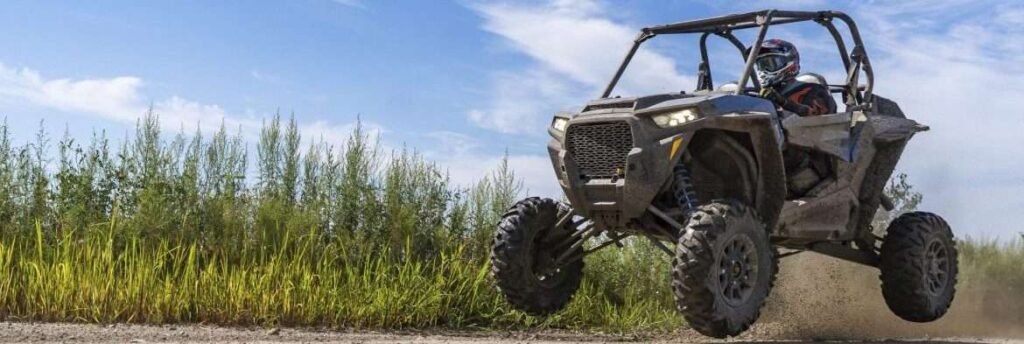
Learn essential UTV safe operating practices for farms and worksites, including maintenance, seatbelt use, training, and hazard prevention to reduce injuries.
Utility terrain vehicles (UTVs) are valuable tools for hauling materials, transporting people, and accessing off-road locations. They are becoming increasingly common on farms and worksites because they’re often viewed as a safer alternative to ATVs. While UTVs do offer additional safety features, they are not risk-free. As their use increases, so do UTV-related fatalities and serious injuries. Most incidents can be prevented by understanding the hazards and using the equipment responsibly. Use this checklist to help keep your team safe.
What is a UTV?
A UTV is a Class IV ATV with a steering wheel, non-straddle seating, and a maximum width of 65 inches. They are commonly called side-by-sides or referred to by brand names such as the John Deere Gator or Honda Pioneer. A UTV generally seats two to six people, has four-wheel drive, and is designed for off-road use.
Preventative Measures
Proper maintenance and the right equipment are essential for safe UTV use.
- Establish a maintenance schedule and checklist for each UTV.
- Check fuel, brakes, and tires before operation.
- Inspect seatbelts for wear or damage.
- Equip UTVs with Slow Moving Vehicle (SMV) signs when appropriate.
- Secure loads using ratchet straps or other approved devices.
- Conduct a job hazard analysis to identify needed PPE and control measures.
Driving the UTV
- Do not operate a UTV with brake, parking brake, or tire issues—tag it out of service until repaired.
- If the UTV has a rollover protection structure (ROPS) or enclosed cab, wear your seatbelt.
- If the UTV does not have ROPS or a cab, do not wear the seatbelt.
- Never carry more passengers than the number of available seats or seatbelts.
- Avoid sharp turns and sudden starts or stops.
- Maintain a safe speed—even if the UTV can reach 50 mph, that speed is rarely safe on a farm, ranch, or jobsite.
- When driving in fields or off-road, slow down and watch for ditches, holes, and other hazards.
- Make sure all tools and equipment are secured in the cab or cargo bed.
Customize Your Safety Measures
- Review the manufacturer’s safety information for your specific make and model with your team.
- Understand model-specific issues:
- UTVs without power steering can be harder to control.
- UTVs with a hydrostatic pedal may accelerate or stop abruptly.
- Identify hazards on your property—wire gates, hidden holes, blind corners—and repair or flag them.
- Enforce company-specific policies, including PPE requirements, speed limits, restricted areas, and towing/load guidelines.
Employee Training
Regardless of experience, every worker must be trained on how UTVs are used at your operation, since expectations may differ from previous jobs.
Effective training includes:
- A walk-around inspection to review safety features and pre-/post-use checks.
- Clear explanation of policies: speed, passengers, load limits, maintenance, and seatbelt use.
- Sharing near-misses or incidents involving UTVs.
- Using short safety talks, such as tailgate briefings or toolbox meetings.
Seatbelt Use
Because UTVs often replace ATVs, some operators think of them as larger versions of the same machine. In reality, the risks make them behave more like a small pickup.
Seatbelts are the most important safety feature. ROPS provide protection only if riders are kept inside the structure during a rollover—something that cannot happen without a seatbelt.
Always wear your seatbelt when the UTV is equipped with ROPS, especially at higher speeds or on uneven terrain.